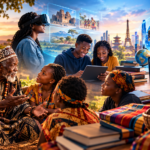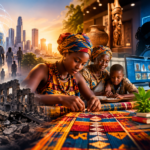
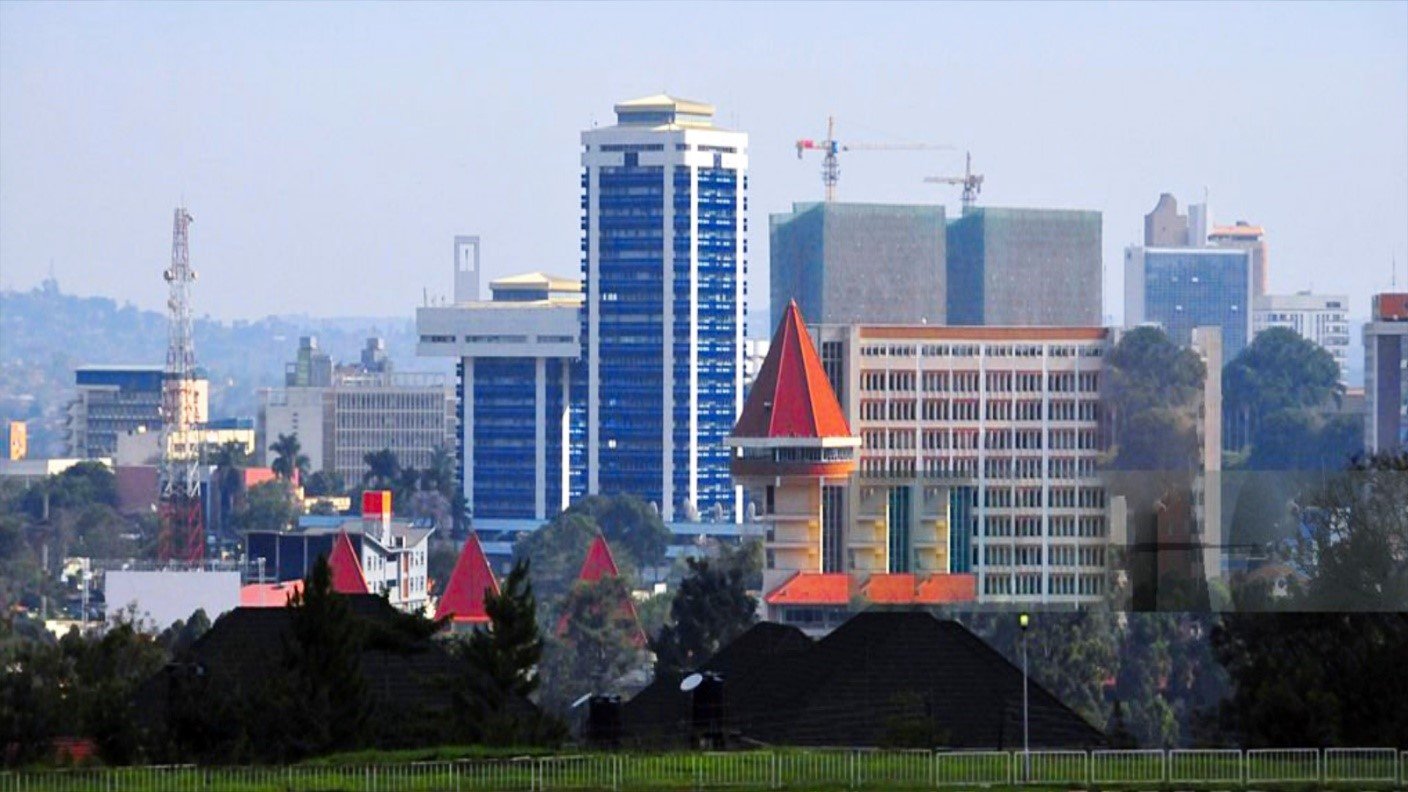
Kampala, the city of seven hills, is not just Uganda’s capital, it is a symbolic and conceptual frontier: the “New Meroe City”, an ideology rooted in re-creation of mass personality and identity based on comprehensive understanding of self.
What It Is:
This idea does not describe a physical reconstruction of space, nor does it seek to carve out a utopian society. Instead, it symbolises the African man as he sheds the inherited limitations imposed by colonial systems, artificial borders, and rigid ideological constructs. In this reimagined Kampala, society gravitates toward harmony, guided not by imposed divisions, but by awareness, shared purpose, and self-realization.
At the heart of the New Meroe City is a simple yet radical understanding: the only true limitation to human achievement is the self. Through the acquisition of knowledge and a deeper awareness of identity, an individual is capable of dismantling old habits and even create new ones.
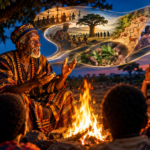
This vision is partly inspired by a convergence of ancient and contemporary knowledge systems. Archaeological discoveries, the ‘wonders of the world’ alongside traditional myths and oral narratives preserved by griots, suggest that humanity’s intellectual and technological advances may have been influenced by life beyond conventional human understanding. Whether interpreted metaphorically or literally, these accounts do invite a reexamination of human potential.
However, the New Meroe City does not exist in isolation from present-day realities. Kampala itself serves as a microcosm of global capitalist system, a bustling urban space where money, a fundamental need for modern city life. Transactions define access, and over time, value systems become subtly shaped by material exchange. Money increasingly influences judgment, decision-making, and even perceptions of character. The risk though lies in mistaking material worth for intrinsic value.
The New Meroe City challenges this paradigm. It emphasizes that while money may fuel systems, it should not define the essence of human identity or relationships.
The Movers:
The conceptual overseer and herald of this mindset is Cipher 360 Degrees. Cipher 360 highlights the powerful connection between thought and reality, suggesting that individuals are not merely participants in life, but co-creators of their experiences. The idea that “two heads are better than one” is a deeper principle of co-creation where individuals complement one another, building mutually beneficial relationships that strengthen the social fabric. The emphasis is not on authority or control, but on dialogue and shared responsibility within a larger ecosystem. Equally important is the concept of self-knowledge. Within the New Meroe City, understanding oneself is regarded as the highest form of knowledge.
On Religion:
On the question of religion, the philosophy does not oppose existing beliefs or affiliations. Instead, it acknowledges the eternal nature of God and humanity’s inner link to the divine. In the Bible, the term “manifold wisdom” appears in Ephesians 3:10, where it is used to describe God’s plan to reconcile humanity to himself through the death and resurrection of Jesus Christ. The passage reads: “His intent was that now, through the church, the manifold wisdom of God should be made known to the rulers and authorities in the heavenly realms.” The idea of “manifold wisdom” suggests that God’s wisdom is not a single, straightforward concept, but rather multifaceted and can only be understood and appreciated when looked at from many different angles. It implies that there are many ways to approach and understand God’s wisdom, and that no single perspective can fully capture its depth. Individuals are conduits, capable of manifesting the highest potential available within their human capacity.
The city may remain the same in structure as it becomes something entirely new in mindset.