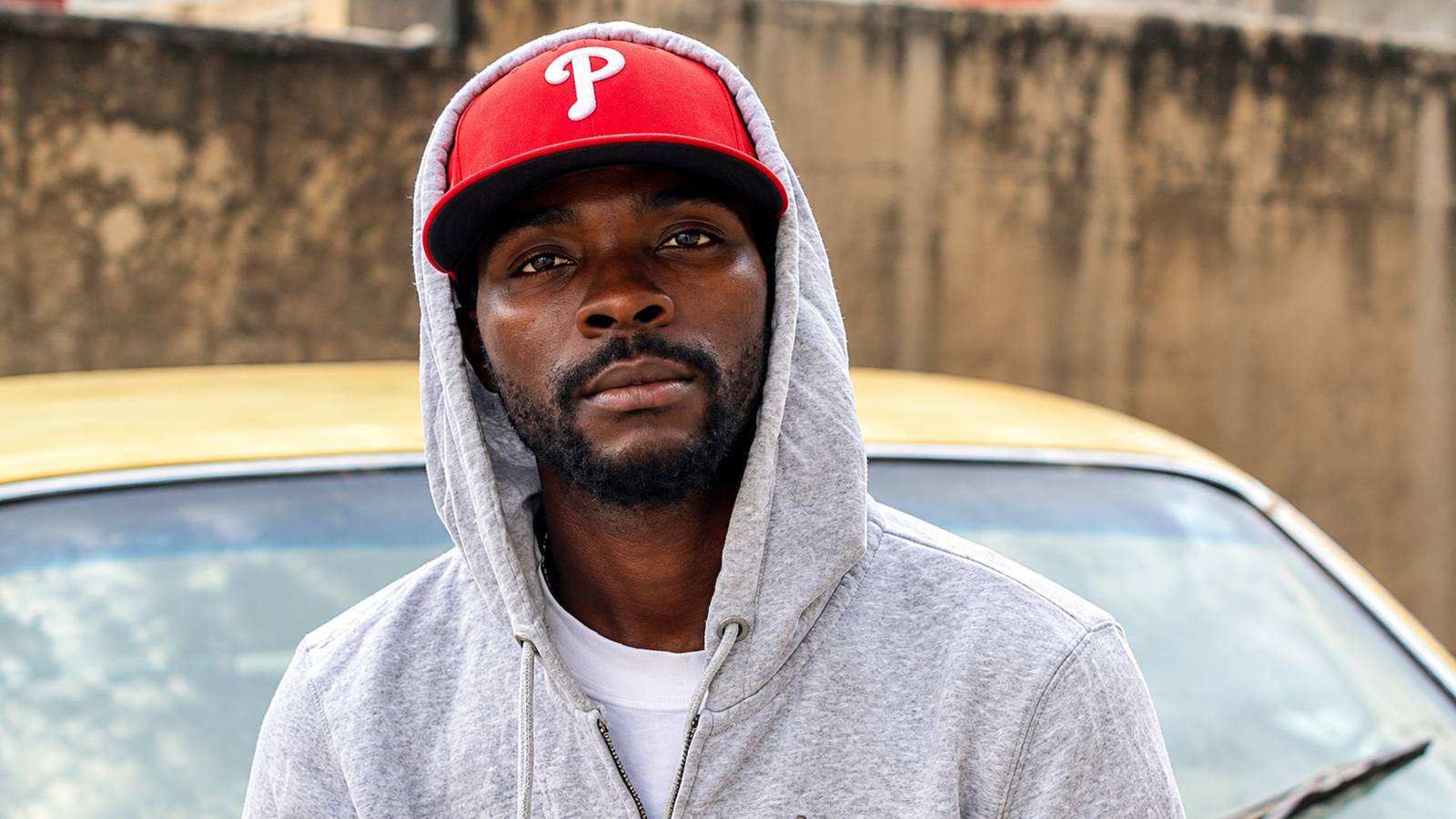
On November 28, 2018, Ugandan hiphop and the local music fraternity was stunned by news of the demise of veteran rapper Mulekwa Nampeera at Kiruddu Hospital in Makindye, Salaama after battling throat/oesophageal cancer for an extended period. At only 35 years of age and coming at time when the rapper was riding airwaves with a string of successive singles titled “Abaana Bano”, his passing came rather untimely. The shock stamp it left was solid enough, I still remember where I was, what I was doing, when the news hit me…
The Genealogy:
Born Denis Kalimu, the rapper widely known as Mulekwa Nampeera was born and raised in the ghettos of Kawempe Bwaise, a suburb of Kampala. Bwaise is notoriously known as a challenging, flood-prone environment, but it has historically been a creative furnace for some of Uganda’s rawest hip-hop talent. Mulekwa was a self-proclaimed ghetto child. His entry into the music world was deeply influenced by the environment he grew up in and the birth of the indigenous hip-hop movement in Uganda. The Bwaise environs exposed him to raw, everyday street struggles. He was influenced to use music as a conduit for authentic storytelling, adapting the unfiltered truth of local life in his signature, direct Luga-flow and a clever play with words.
Mulekwa started his musical journey in the late 1990s, using his original name “Denis” and variations like “Deno” before adopting the moniker “Mulekwa” around 2002. He was inspired by early pioneers of Ugandan hip-hop like Yung Vibes and Bataka, who proved that rapping in Luganda was a powerful form of expression. In 2003, his drive for music culminated in the co-founding of the rap group Abenganda Clan alongside his long-time friends Mukunja Rokym (R.I.P.) and D’Kloz, a sensational vocalist who joined the group at a later period. The group went on to release a string of underground classics.
The Gems:
Among those classic gems, “Story Za’bulimba” stood out remarkably due to its unprecedented, comic-infused verses. This refreshing and humorous lyrical style, which was largely unpopular in mainstream rap at the time, quickly became Mulekwa’s artistic trademark. “Radio” (The Announcement): Released circa 2012, “Radio” was an official, literal declaration to the airwaves and the public that a formidable lyricist had arrived. “Tubaddewo” (The Celebration of Longevity): Translated to “We have been here,” “Tubaddewo” was a definitive stamp of resilience. It was a celebration of how he and the Abenganda Clan weathered the storm and maintained their presence even while in the underground Lugaflow scene.
“Bampita Ebweru” / “Nassalawo“: His early collaborations with Mcee Big Sam Yiga—including tracks like “Nassalawo” produced by Nase Avatar—highlighted the raw, competitive synergy of that era.
On “Byawongo” and “Bukokolo,” he infused the classic, guitar-driven rhythms and narrative structure of traditional Kadongokamu into his hip-hop style for an unique experimental sonic fusion.
On “Mpola,” Mulekwa penned a heartfelt ode to hip-hop, using his signature aura to honor the culture that shaped him. He contrasted this artistic reverence in “Ebikolwa Byange,” a gritty masterclass in hypothetical sarcasm and dramatic lyricism. In the song, he boldly claimed his blood is too hard of a metal to ever catch HIV, mirroring the exact, reckless coping phrases street youth use to make peace with infidelity and the dangers of a fast life. In “Olugero” (featuring Herbert Ssensamba), Mulekwa employed his storytelling expertise for vivid narrative threads over Ssensamba’s soulful backdrop. He then flipped this narrative focus into a spiritual declaration in “Obutonde,” fiercely asserting the divine origins of his rapping style. Within the track, he explicitly breaks down how his lyrical gift is a natural, God-given force, justifying the ultimate bragging rights attached to his self-proclaimed rap savior persona.
The Era Of Hipipo:
Post 2015s, Mulekwa Nampeera’s transition from an underground Lugaflow lyricist to a commercially structured artist was greatly shaped by a professional management and record deal. The primary backing came through a structured alliance involving Koncept & Sakyas, a label wing operated by Ugandan entertainment company, HiPipo. In late 2015, Mulekwa took a big leap forward in his career by signing a comprehensive five-year contract under them. The deal was designed to move Mulekwa away from the casual “street-grind” distribution of the early 2000s and place him into a formal commercial ecosystem. Under this deal, the label took full control of his branding, music distribution, and video funding. It was during this reign that his massive crossover singles like “Bukokolo” and the hit “Abaana Baano”, received considerable mainstream backing, resulting in high-profile nominations at the HiPipo Music Awards. Mulekwa proudly carried this affiliation, even introducing his official digital channels with the baseline declaration: “I am a product of Koncepts & Sakyas”. The collective catalog under Koncepts UG is what brought his music to international streaming platforms, organizing his milestone tracks into the definitive Determination compilation. This record deal essentially morphed his raw underground identity from crews Abaana Beka, Abenganda Clan into a professionally managed brand before his tragic passing cut the 5-year contract short. His tragic passing also disrupted the formal commercial rollout of the standalone Obujulizi project.
Obujulizi, The Testimony:
When he rolled out early singles onto platforms like SoundCloud in 2015, he explicitly tagged tracks like “Nassalawo” (featuring Big Sam Yiga) with the caption: “This is just one of them off my forthcoming album ‘Obujulizi’”. True to the meaning of the word (Obujulizi translates to “Evidence” or “Testimony” in Luganda), the album was to be a comprehensive lyrical archive. It was meant to be the absolute proof of his mastery, and his “rap savior” persona. The concept had been adapted from the themes of his life; the highs, lows, partnerships, break-evens. The entire backbone of the album was being assembled at the Portbell Drive Music studio, entirely engineered and produced by Nase Avatar. This is why the tracks have a cohesive, gritty, sample-heavy boom-bap energy unique to classic Lugaflow.
Following his tragic passing, Mulekwa’s musical brothers ensured his voice wouldn’t fall silent. The posthumous album, Obujulizi, was officially released during his 2019 tribute concert. The project was spearheaded by his close friend Big Sam Yiga, who compiled Mulekwa’s unreleased music recorded at Port Bell Drive with producer Nase Avatar. This project is an 18-track LP featuring Kwesto, D’lux, legends that had always inspired Mulekwa’s career in rap, on a tribute track. “Webale ssebo” has Mulekwa directly acknowledging the latter’s influence on his career. “Abantu” (People) features Spyda Mc. “Abayimbi” is a razor-sharp commentary dissecting the music industry and fellow artists. Big Sam himself featured on “Mirandira“, a track on the roots in which he was nurtured and musically tethered.
The Reputation:
Mulekwa Nampeera’s raw storytelling and artistic spirit remain alive in the Ugandan hip-hop underground, even eight years after his passing. Celebrated for his distinct, effortless signature flow, his deep lyrical content solidified his reputation as one of the most prolific storytellers the local rap game has ever seen. Lugaflow MCs continue to emulate his rhythmic precision, unmatched urban metaphors, and the distinct street-smart grit he bred in the trenches of Kawempe and Bwaise.
Mulekwa’s death deeply shook the hip-hop fraternity. To process the grief and channel their collective anger against the disease that took him, A Few Good Friends (AFGF) rap collective—including St. Nelly-Sade, Enygma, Lethal, Ajo, T-Bro, and Shakira Zion—released a collaborative track titled “Wantama” (The Cancer Diss), a fiery, explicit curse against cancer for stealing the lives of Mulekwa and so many other irreplaceable Ugandan creatives.
Watch Obutonde by Mulekwa: